The Lusitanians (or Lusitani in Latin) were Indo-European
living in the Western Iberian Peninsula long before it became the Roman
province of Lusitania (modern Portugal south of the Douro River and what
now is Extremadura in modern Spain). They spoke the Lusitanian
language, and were either of Celtic origin or else as believed even with much older roots. The great majority of Portuguese see the Lusitanians as their ancestors and a few from small minority still see themselves as lusitanians. The most notable
Lusitanian was Viriato.
The
Lusitanians worshipped various gods in a very diverse
polytheism, using animal sacrifice. They represented their gods and
warriors in rudimentary sculpture.
Endovelicus was the
most important god: his cult eventually spread across the Iberian
peninsula and beyond, to the rest of the Roman Empire and his cult
maintained until the 5th century; he was the god of public health and
safety. The goddess
Ataegina was especially popular in the south; as the goddess of rebirth (Spring), fertility, nature, and cure, she was identified with
Proserpina
during the Roman era. Lusitanian mythology was related to Celtic
mythology, and during later Roman rule it also became heavily influenced
by Roman mythology,
as Romans also started venerating Lusitanian gods. Runesocesius, the javelin god, was also an important god, and often formed the supreme trinity in the Lusitanian pagan religion with
Endovelicus and
Ataegina.
The
Lusitanians practiced the cult of the dead, and used cremation.
Of particular importance and popularity, especially following the Roman conquest, were a number of deities among whom were
Endovelicus,
Ataegina, Nabia and Trebaruna. Endovelicus was a god of healing and
also had oracular functions. With ninety-four separate dedications,[1]
he appears to have been the most important of all.
Ataegina is less well defined; her name has been derived from Celtic *atte-gena perhaps meaning "reborn".
Nabia may have been two separate deities, the consort of the Lusitanian equivalent of the Roman
Jupiter and another associated with earth and sacred springs while
Trebaruna's
name appears in inscriptions in the Lusitanian language associated with
another, presumably male deity named Reve, whom Witczak suggests may be
the equivalent of the Roman
Iovis or
Jupiter,
both names ultimately deriving from Proto-Indo-European *diewo-.
Some of the Lusitanian Gods:
A
Abna
Aernus
Aetio
Albucelainco
Ambieicris
Arabo
Aracus
Arentia
Arentio
Ares Lusitani
Ataegina
B
Bandua
Bormanicus (Borvo)
C
Cabuniaegenis
Candeberonio
Cariocecus
Carneus
Cauleces
Collouesei
Coronus
Coruae
Coso
D
Debaroni Muceaigaego
Dercetius
Duberdicus
Durius
E
Endovelicus
Edovio
Eniragillo
Epona
Erbina
F
Frovida
I
Igaedo
Ilurbeda
L
Laepo
Laho
Laneana
Laraucus
Lucubo
Lurunis
M
Miraro Samaco
Moelio
Moricilo
Munidis
N
Nabia
Netaci
Neto
O
Ocaere
Q
Quangeio
R
Reo
Reue
Runesocesius
S
Sucellus
Sulae Nantugaicae
T
Tameobrigus
Toga
Tongoe
Tongoenabiagus
Torolo Gombiciego
Trebaruna
Turiacus
Trebopala
V
Verore
Vestio Alonieco
and about my Goddess
Ataecina:

Ataegina was worshiped in Lusitania and Betica; there were also
sanctuaries dedicated to Ataegina in Elvas (Portugal), and Mérida and
Cáceres in Spain, along with other places, especially near the Guadiana
river. She was one of the goddesses worshiped in Myrtilis (today's
Mértola, Portugal), Pax Julia (Beja, Portugal) and especially the city
of Turobriga, whose precise location is unknown. A bronze plaque from
Malpartida de Cáceres suggests associations with the goat as a sacred
animal.
The name Ataegina is most commonly derived from a Celtic source: the two
roots *atte- and *geno- to mean "Reborn" or from *ad-akwī- (Irish
adaig) meaning "night", Epigraphs from the Badajoz region associate the
goddess with the Roman Proserpina or Persephone which would make her a
goddess presiding over Spring and seasonality, echoing the "reborn"
derivation of the name.
and my Godess
Nabia:
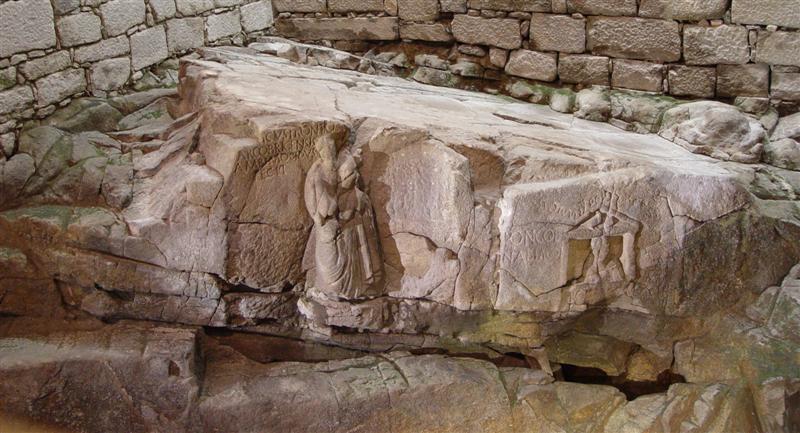
Nabia was the goddess of rivers and water in Gallaecian and Lusitanian
mythology, in the territory of modern Galicia (Spain) and Portugal.
The present-day Navia River and Avia_(river) in Galicia, was named in
honor of the deity. Likewise, the Neiva River, near Braga (Bracara
Augusta, old Roman capital of Gallaecia) and Nabão River who passes
through the city of Tomar are also named after her.
The goddess Nabia was very popular in the territory of the Callaici
Bracari with several inscriptions, like the one in a Celtic language at
Braga's Fonte do Ídolo (Portuguese for Fountain of the Idol)
Sucellus:
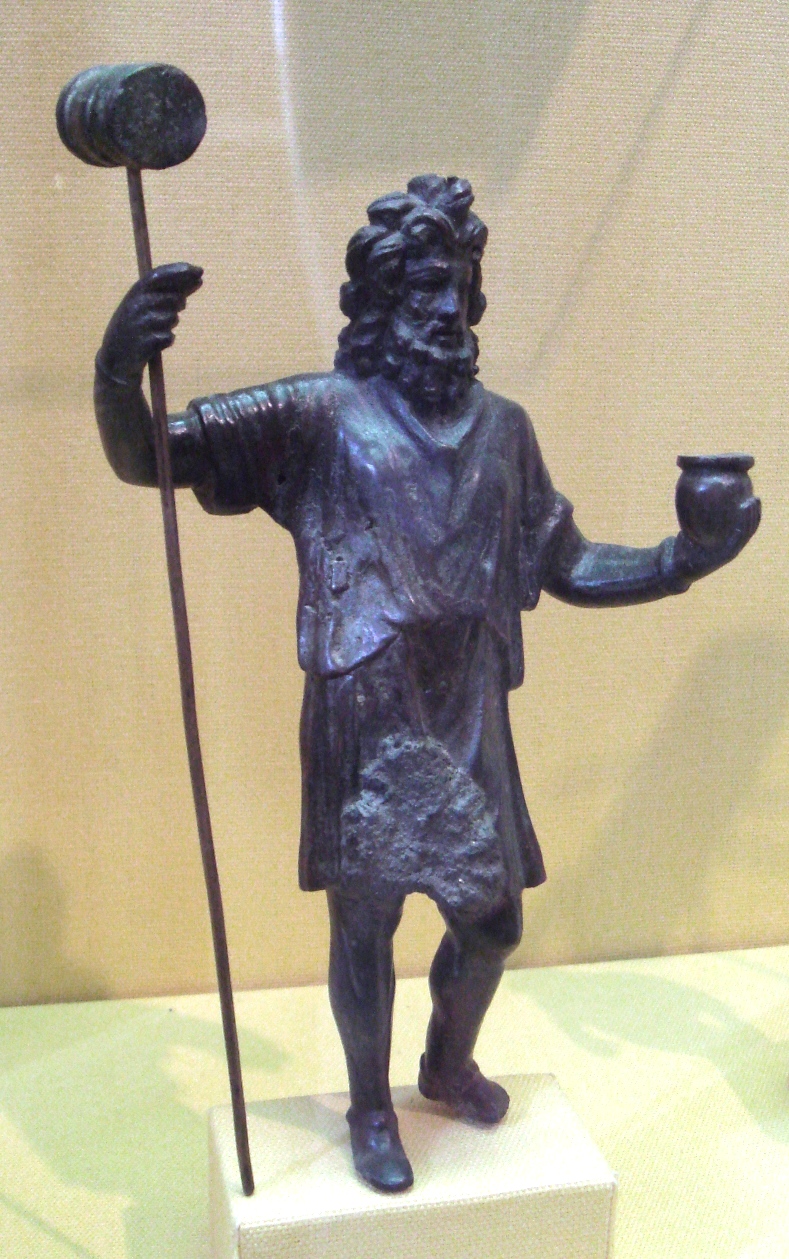

Sucellus or Sucellos was the god of agriculture, forests and alcoholic
drinks of the Gauls, also part of the Lusitanian mythology. Sucellus may
also have been thought of as a creator god...



.png)


